

Bipolar
October is breast cancer awareness month, and you will see a lot of pink, but breast cancer does not only affect women, but it also affects men.
Breast cancer is the most common type of cancer in the UK. Most women diagnosed with breast cancer are over the age of 50, but younger women can also get breast cancer. 5% of breast cancer warriors are under the age of 40 years old and in men most breast cancer is diagnosed in their 60’s.
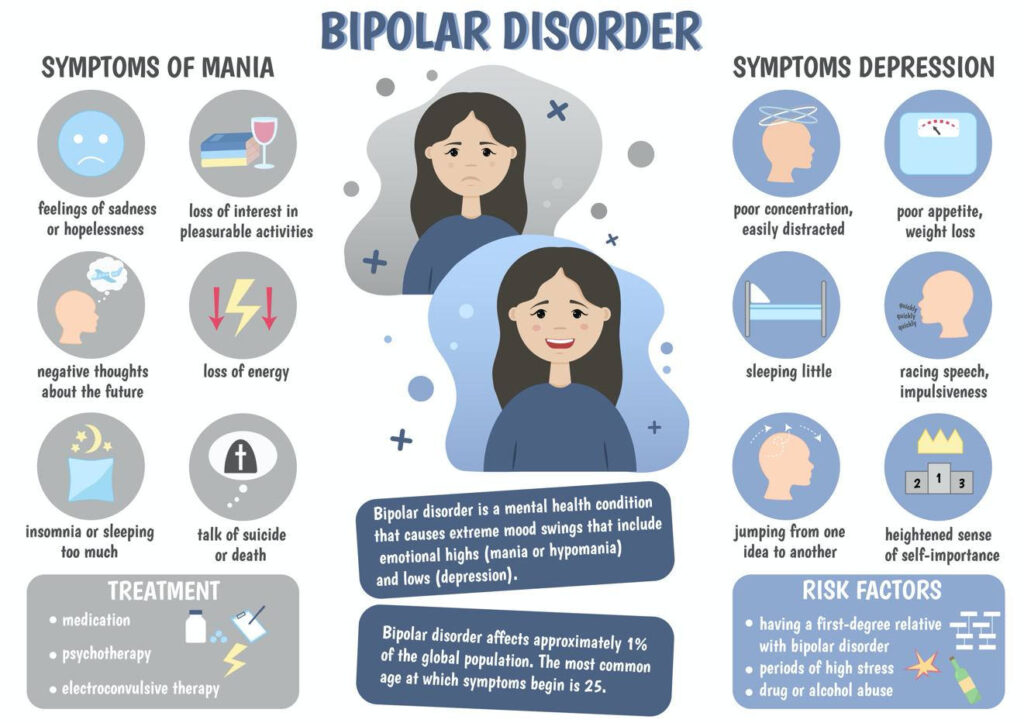
Myths about Bipolar Disorder
MYTH: All bipolar people are the same.
There are two main types of the disease Bipolar I which is periods of severe mania and depression and Bipolar II involves less ‘hypomanic episodes’ but still have periods of severe depression. Only a small percentage of bipolar suffers experience rapid cycle where they may have numerous mood episodes a year, for most the switch takes longer.
MYTH: People with bipolar cannot hold a steady job.
Many people with bipolar disorder hold down jobs and live a fulfilling, normal lives and it is just not true. Work often gives people a sense of structure in their lives and helps then reduce depression and increase their confidence.
Myths about Bipolar Disorder cont…
MYTH: Substance abuse is the cause of bipolar disorder. Substance abuse cannot cause bipolar disorder.
MYTH: People with bipolar cannot hold a steady job.
Many people with bipolar disorder hold down jobs and live a fulfilling, normal
lives and it is just not true. Work often gives people a sense of structure in their lives and helps then reduce depression
and increase their confidence.
MYTH: People with bipolar are either in a manic or depressive episode.
Everyone has a good and bad day, however someone with bipolar will experience longer periods of mood imbalance. Most people go long periods without any episodes.
How can I help someone with Bipolar Disorder?
Caring for someone with bipolar can be hard. Here are some tips on how you can help support someone with bipolar.
- Listen – pay attention to what they say and don’t assume you understand.
- Be aware of their symptoms –
know what their symptoms are and talk to the individual when you notice them as they may not be as aware of the change as you. - Do not give up on them – they may pull away and isolate themselves. Do not take this personally they are struggling to deal with themselves let alone see others. Make sure
that you stay in contact with them and keep including them. - Make a support plan – bipolar in its nature is an unpredictable illness, make sure that that a plan is put together of ways you can help and protect them.
Weekly Wellbeing Tip
Spend some time with someone that you love.