
Introduction
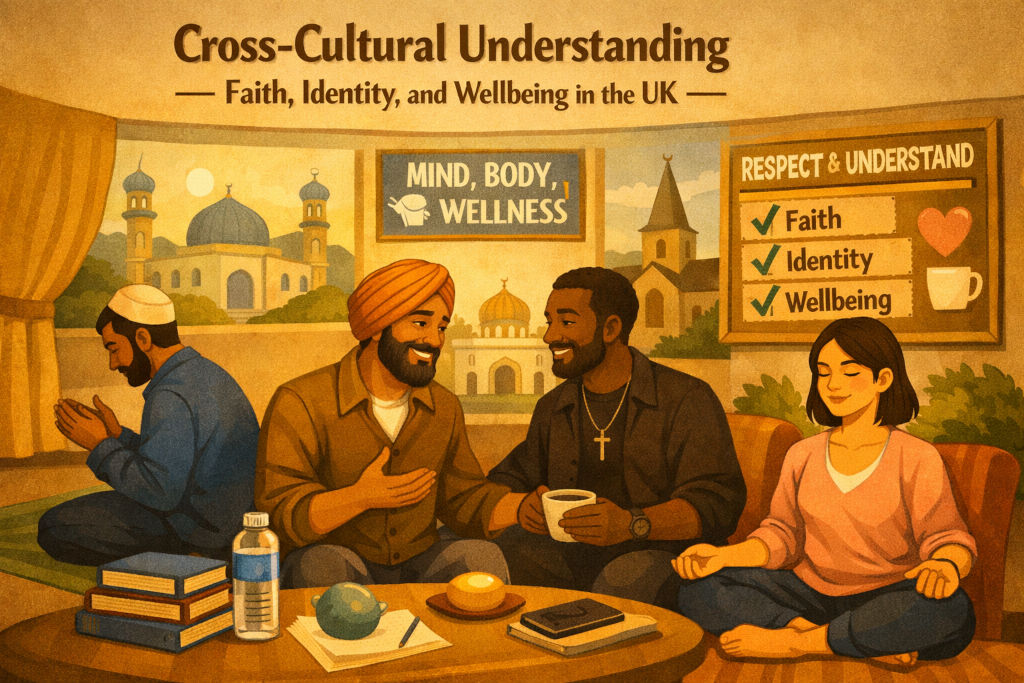
Faith and spirituality are vital sources of strength, comfort, and resilience for many individuals across the UK. People from a wide range of beliefs—including Christian, Muslim, Hindu, Sikh, Jewish, Buddhist, and non-religious worldviews—draw on their faith to support mental health, build community, and find meaning.
Recognising the role of faith within intersectional identities and how it interacts with gender, ethnicity, neurodiversity, and sexual orientation is essential for culturally competent wellbeing approaches.
Faith as a Pillar of Wellbeing
Spiritual practices such as prayer, meditation, religious rituals, and communal worship foster:
- Social connectedness and support networks
- Hope, purpose, and resilience in times of hardship
- Stress relief and emotional regulation through routine and reflection
Diversity and Inclusion within Faith Communities
Many UK faith communities are embracing LGBTQ+ inclusion, neurodivergence awareness, and cultural diversity. Examples include:
- Inclusive churches and mosques providing safe spaces.
- Multifaith mental health initiatives like the NHS Faith and Spirituality network.
- Groups combining cultural celebrations with wellbeing activities.
Cross-Cultural Initiatives Supporting Wellbeing
- The Inclusive Church movement (inclusive-church.org) advocates for openness and acceptance.
- The Inter Faith Network for the UK (interfaith.org.uk) promotes dialogue and cooperation across all faiths.
- Local faith centres often host mindfulness, yoga, or support circles relevant to mixed communities.
Outdoor Spaces for Spiritual and Emotional Renewal
Sacred or contemplative outdoor spaces provide respite and inspiration:
- Church or temple gardens, quiet spaces in botanical gardens, or coastal spots for reflection.
- Participating in faith-based outdoor retreats or pilgrimages accessible to diverse communities.
Mindfulness Prompt
“Recall a spiritual or cultural space where you feel grounded. Close your eyes and imagine being there. What sensations and feelings arise?”
Conclusion
Recognising faith as a vital part of identity and wellbeing informs more compassionate and effective mental health support. Embracing cross-cultural and intersectional perspectives enables communities across the UK to feel seen, valued, and supported.