Introduction
Summer festivals across the UK are vibrant hubs of culture, creativity, and connection, offering rich opportunities for personal growth and community engagement. For neurodivergent individuals, these settings can also present sensory and social challenges. Embracing strategies that align with ikigai—finding joy, purpose, and community—can transform festival experiences into empowering and fulfilling occasions.
Understanding Challenges and Strengths
Festivals can be noisy, crowded, and busy, which may overwhelm sensory systems or social energy. However, they also provide opportunities to explore passions (music, art, food), meet like-minded people, and develop resilience.
Practical Strategies for Neurodivergent Festival-Goers
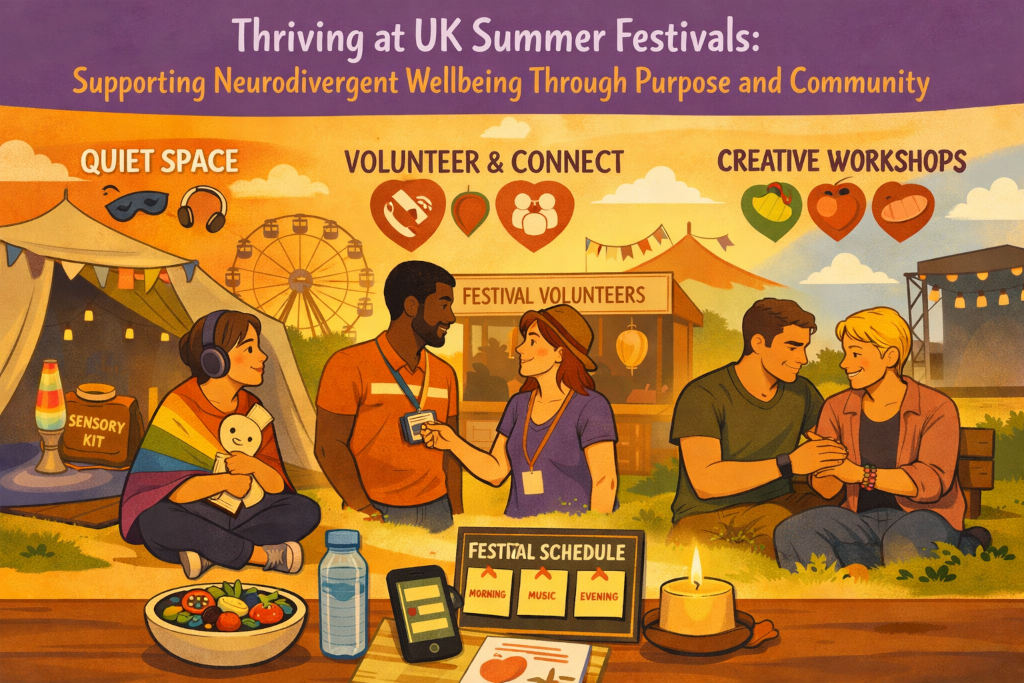
- Preparation and Planning: Research festival layout and quiet spaces. Plan arrival and departure times to avoid peak crowding.
- Purposeful Participation: Choose activities that resonate with your interests or skills—volunteering at a stall, attending workshops, or engaging in creative expression.
- Community Connection: Attend with friends or join support networks connecting neurodivergent individuals.
- Self-Care Rituals: Schedule downtime and use sensory tools to recharge energy.
The Role of Volunteering and Contribution
Many UK festivals offer volunteer roles, whether welcoming attendees, assisting disabled services, or supporting outreach. Volunteering creates purposeful connection, skill-building, and a sense of belonging—core to wellbeing and ikigai.
Outdoors and Mindfulness
Between activities, find calm in park areas or open-air spaces. Use mindful breathing and sensory grounding techniques to stay present and balanced.
Mindfulness Prompt
“What activity at this festival aligns with your passions or values? How does contributing to the event deepen your sense of purpose?”
Reflect on how engaging meaningfully supports your wellbeing.