Introduction
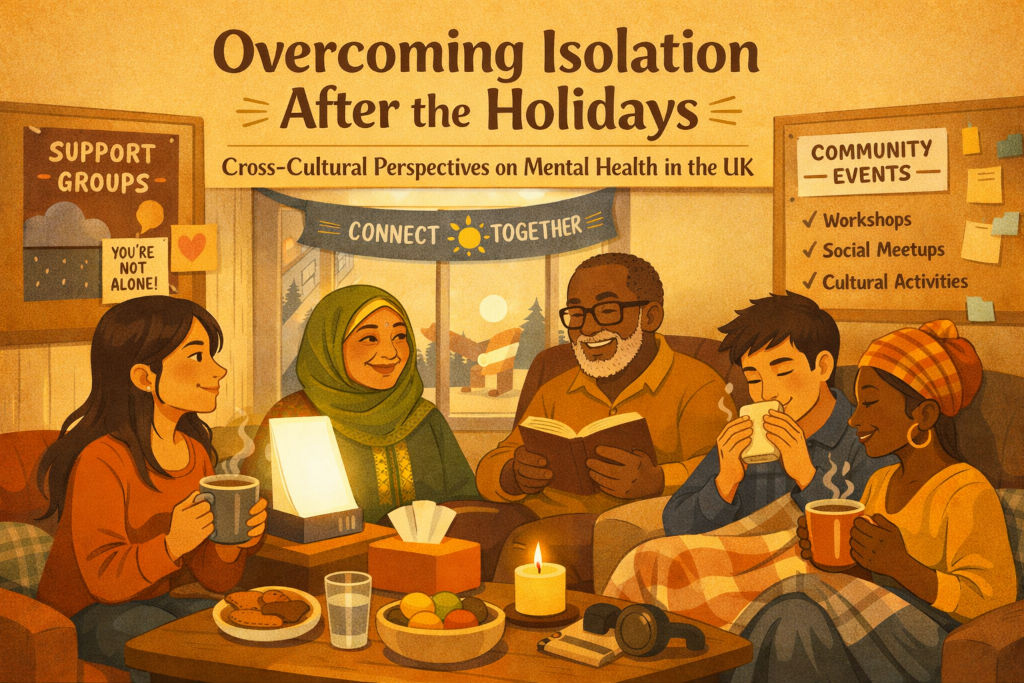
The period following the festive season can be challenging for many people. Feelings of isolation, loneliness, and anxiety often increase as social engagements taper off and winter months continue. These experiences may be amplified for people living in culturally diverse UK communities, especially where diaspora, faith practices, socioeconomic factors, or intergenerational differences shape social support networks.
Additionally, neurodivergent individuals and people managing mental health conditions may find the post-holiday lull particularly difficult. This blog explores cross-cultural approaches that highlight community, resilience, and practical ways to nurture mental wellbeing during this transitional time.
Why Post-Holiday Isolation Happens
Several factors contribute to increased isolation after the holidays:
- Departure of family and friends who may have travelled for celebrations.
- Shifts back to work or study removing the social stimulation of the season.
- Changing routines that some neurodivergent people find unsettling.
- Financial stress following holiday expenses.
These elements intersect with cultural expectations and social networks, influencing how people experience and manage this time.
Cultural Nuances of Social Connection in the UK
The UK is home to people from numerous cultural and ethnic backgrounds. Concepts of community, support, and mental health vary widely:
- South Asian communities: Often emphasise extended family and religious community gatherings for social support. However, sometimes mental health stigma can limit open discussion. Organisations like TIDE address mental health awareness in diverse faith communities.
- Caribbean and African heritage communities: Strong church and community group networks provide social meaning but can also create pressure to conform, affecting mental health disclosure.
- Eastern European communities: Migration experiences combined with language barriers may increase social isolation outside familiar support circles.
- Refugee and asylum seeker populations: These groups often face trauma and displacement challenges alongside cultural disconnection.
Supportive Services and Community Initiatives in the UK
Recognising these complexities, a range of UK organisations support diverse communities:
- Jericho House: Provides culturally sensitive mental health support, especially for African and Caribbean men.
- Shine: Focuses on mental health in minority ethnic communities across England.
- Mind’s Diversity and Inclusion initiatives: Deliver multilingual resources and community outreach (mind.org.uk).
Faith organisations also often provide culturally specific events during post-holiday periods, giving space for shared reflection.
The Importance of Outdoor Social Activities
Engagement in community-based outdoor activities offers physical and mental health benefits:
- Local parks are gathering points for cultural festivals, group exercise sessions, and informal socialising (e.g., London’s Brockwell Park, Glasgow’s Pollok Park).
- Walking groups or community gardening projects foster new friendships and connection with nature.
- Many libraries and community centres partner with local councils to organise outdoor activities tailored for older adults, families, and mixed-ability groups during winter months.
Advice for Neurodivergent and Disabled Individuals
Transitions can be especially hard for people with sensory or social processing differences. Recommendations include:
- Planning gradual exposure to social events to avoid overwhelm.
- Using sensory tools such as noise-cancelling headphones during outings.
- Seeking peer support groups tailored to intersecting identities.
- Accessing online communities if in-person connection is challenging.
Mindfulness Exercise
“Close your eyes and recall a comforting place from your cultural or personal history. Imagine being there, feeling safe and connected. What emotions and sensations arise?”
Reflecting on these memories can foster grounding and social connectedness.
Conclusion
Post-holiday isolation is a multifaceted experience influenced by cultural norms, community structures, and individual circumstances. Promoting cross-cultural understanding, accessible social opportunities, and inclusive mental health services is key to helping people overcome isolation and thrive throughout the UK’s winter months.