Introduction
Men’s mental health remains an important but sometimes overlooked area within UK wellbeing efforts. While awareness has grown, many men, especially those from diverse ethnic backgrounds, rural communities, or socioeconomically disadvantaged areas, still face significant stigma and barriers to seeking help. Men with intersecting identities — such as neurodivergent individuals or those from faith communities with specific cultural norms — can experience additional challenges. This post explores how UK initiatives promote men’s mental health through inclusive, culturally sensitive approaches and practical strategies for everyone.
Understanding the Barriers
Some common hurdles include:
- Cultural ideas of masculinity, often emphasising stoicism and emotional restraint.
- Limited availability or awareness of male-friendly mental health services, especially outside major cities.
- Economic stresses, such as job insecurity or financial pressures, which disproportionately affect some ethnic minorities and working-class communities.
- Intersectional factors like neurodivergence, disability, or sexual orientation can compound isolation.
UK Initiatives Supporting Men’s Mental Health
The following organisations offer tailored support:
- CALM (Campaign Against Living Miserably): The UK’s leading charity focused on preventing male suicide and promoting emotional wellbeing. They operate a helpline and outreach programs that are nonjudgmental and accessible (thecalmzone.net).
- Men’s Health Forum: Provides information on mental and physical health with resources designed for diverse UK men (menshealthforum.org.uk).
- Black Men’s Health UK: Addresses health inequalities among Black men with a culturally sensitive approach (blackmenshealth.co.uk).
- Local community projects delivering peer support and culturally competent counselling.
Practical Steps for Wellbeing
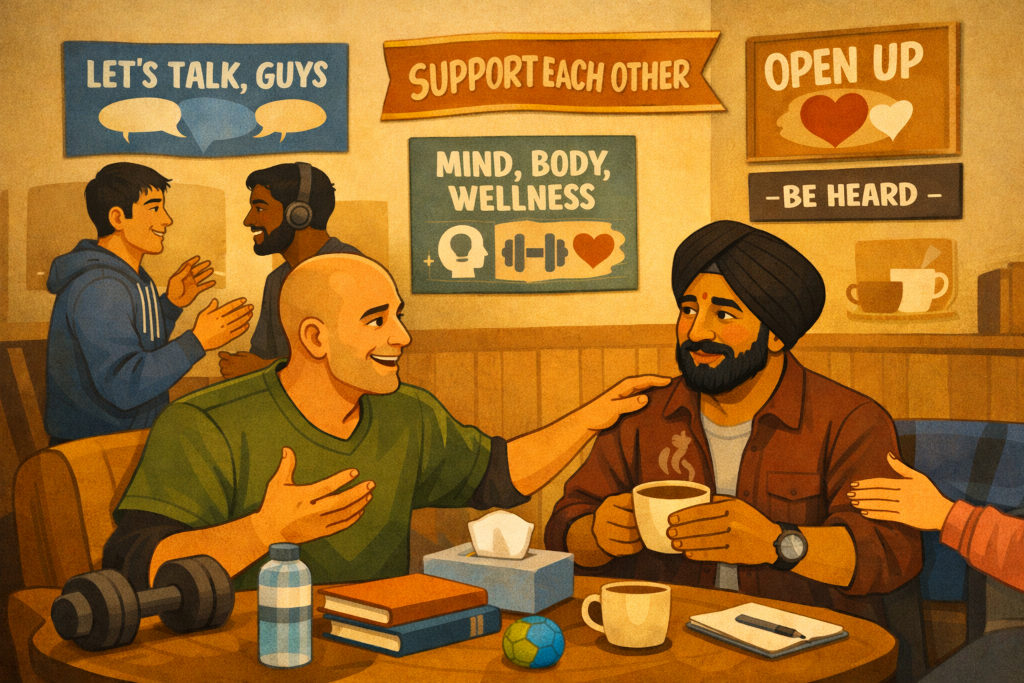
- Encourage open conversations about mental health within families and communities.
- Promote green exercise such as walking football, cycling, or hiking in local green spaces—activities that also foster social connection and improve mood.
- Create safe spaces where men from all backgrounds can share experiences without judgment.
The Outdoors and Connection
Engagement with nature has extensive physical and psychological benefits. Men are encouraged to connect with outdoor activities in parks, coastal paths, or community gardens. Organised men’s outdoor groups or walking networks provide camaraderie and purpose.
Mindfulness Exercise
“Consider what emotional expression feels safest for you. What is one step you can take this week toward sharing your feelings?”
Journaling or talking with a trusted person can be valuable first steps.